Helping restaurant owners manage grease before it becomes a city problem
Helping the City of Lansing reduce sewer damage from restaurant grease by designing for
the people the current system wasn't reaching.
The 90-second version
Problem
47% of sewer blockages in Lansing were caused by grease, but restaurant owners had no accessible guidance on FOG management, and the city had no system to support or enforce it.
Method
Comparative evaluation, 15 stakeholder interviews, 5 user interviews, 211 surveys, and in-person field recruiting at restaurants, food trucks, and farmers' markets.
Finding
Restaurant owners weren't ignoring the problem: they had no accessible information, no public disposal points, and no city touchpoints beyond initial licensing.
Outcome
Delivered a FOG resolution program and management tool prototype to the City of Lansing. Findings were presented directly to the department's Sustainability Manager and department head, who confirmed several recommendations were slated for implementation.
15
stakeholder interviews
211
surveys
7
month engagement
Role
UX Researcher & Designer
Timeline
May–Dec 2022 (UX Design Internship)
Team
2 UX Designers, 2 Data Analysts
Client
The City of Lansing's Public Service Department
Video overview of the FOG project: "Using Information to Keep Drains Clear in Lansing, Michigan," Civic Librarian Project.
Overview
Fats, oils, and grease (FOG) from commercial kitchens caused 47% of Lansing's sanitary
sewer blockages in 2021, resulting in property damage, public health risk, and real cost
to the city. The City of Lansing's Public Service Department brought me on to understand
why, and to design a sustainable way to reduce it.
I led research and design across a 7-month engagement: a team-based discovery phase in
summer 2022, followed by an individual project translating findings into a working
prototype that fall.
My role
I was the project lead for the summer research phase (a team project) and the sole
researcher and designer for the fall prototyping phase, which built directly on that
research. Across both phases, I owned the research design, field recruiting, synthesis,
and the resulting prototype.
Led the summer research phase as project lead on a team project
Owned research design and in-person field recruiting
Synthesized findings from interviews, surveys, and comparative evaluations
Independently designed and built the FOG Management Tool prototype in the fall
Field research
→
Interviews
→
Surveys
→
Synthesis
→
Prototype
→
Presentation
Research approach
Why restaurant owners weren't complying, and what the city could actually do about it.
01 — FIELD RESEARCH
Meeting users where they were
Our primary users, restaurant and food truck owners, were busy, hard to reach, and had
little natural interest in a research study about grease traps. Rather than relying on
recruiting emails or scheduled interviews that weren't landing, I went directly to where
people already were: restaurants, food trucks, festivals, and farmers' markets, using
short, informal conversations to learn about their FOG habits in their actual working
environment.
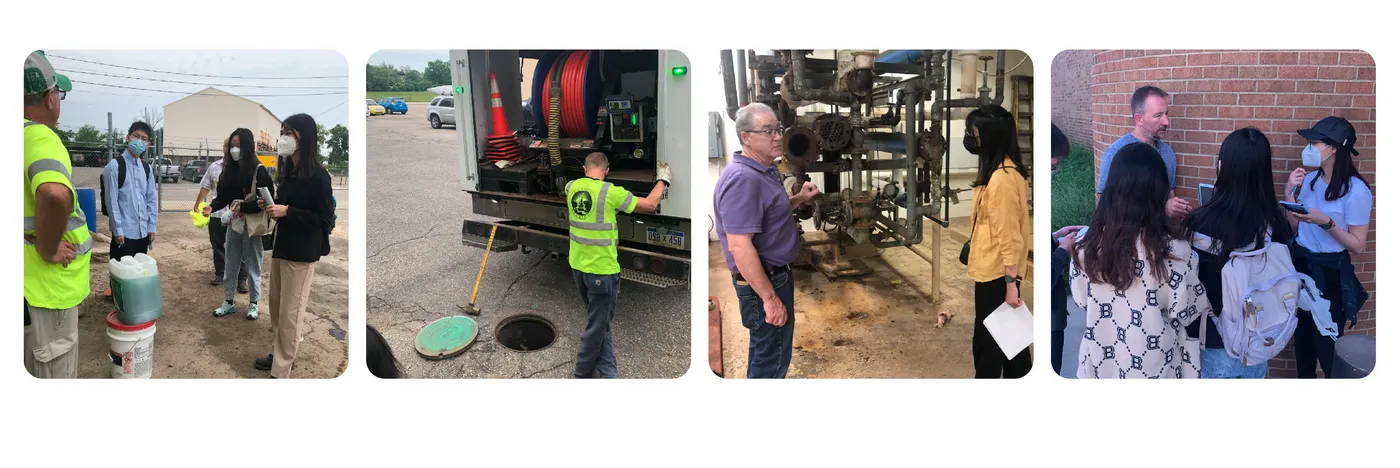
In the field: interviewing restaurant owners, grease haulers, and treatment plant operators where they actually worked.
This fieldwork was paired with more structured research: 15 stakeholder interviews (city
staff, plumbing inspectors, treatment plant operators), 5 user interviews, 211 surveys, and
12 comparative evaluations of other cities' FOG programs.
15
stakeholder interviews
5
user interviews
211
surveys
12
comparative evaluations
Key findings
Most FOG entering public drains traced back to restaurants not maintaining or updating their grease traps, not to malicious neglect
City ordinances didn't specify how grease traps should be maintained, making it hard to hold anyone accountable
There was no public recycling or grease disposal option in the city
Restaurant owners mostly interacted with the city only when opening their business. After that, they managed FOG entirely on their own, with no follow-up support or inspection touchpoints
The city's own staff confirmed the disconnect: budget and staffing shortages made regular inspections or added touchpoints "close to impossible"
The guiding question: How might we make FOG management easier for restaurant
owners, without adding more burden to an already-stretched city staff?
02 — SOLUTION
From research to solution
Two connected pieces of work came out of the research:
1. FOG Resolution Program
A citizen-facing framework addressing the systemic gaps: clearer ordinances, public
recycling and disposal options, outreach and education, and a central source of
information for both residents and businesses.
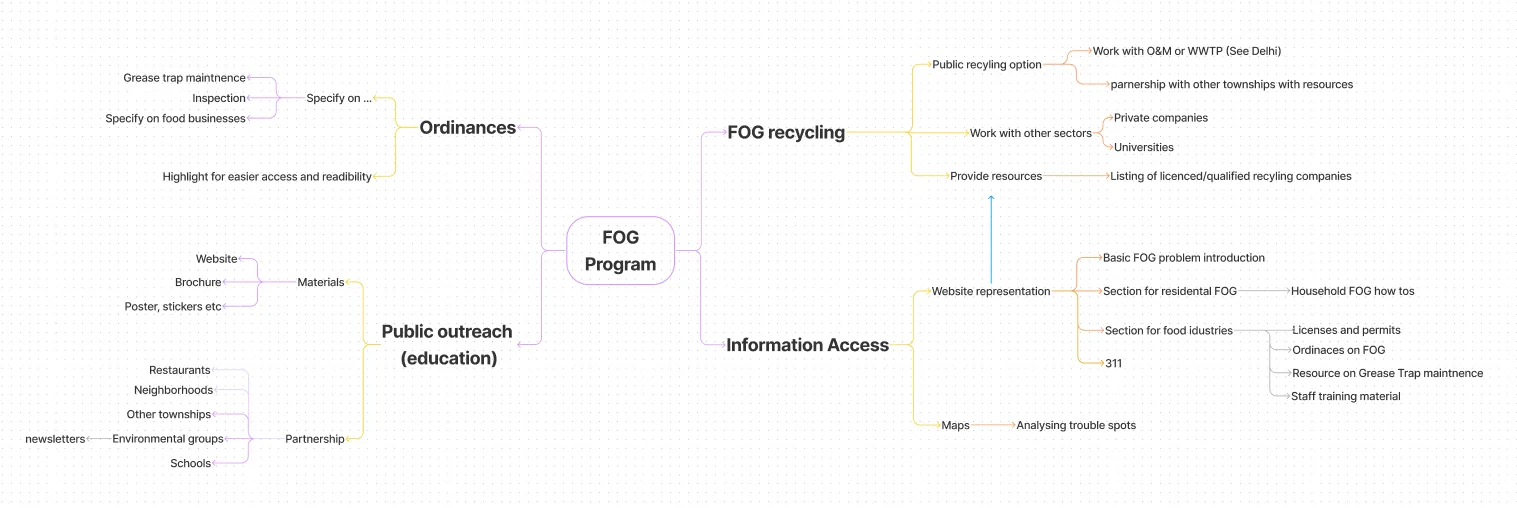
The FOG Resolution Program's four connected pillars: ordinances, recycling, public outreach, and information access.
2. FOG Management Tool (Prototype)
Built in the fall phase, this tool gave restaurant owners a centralized way to manage
their own compliance:
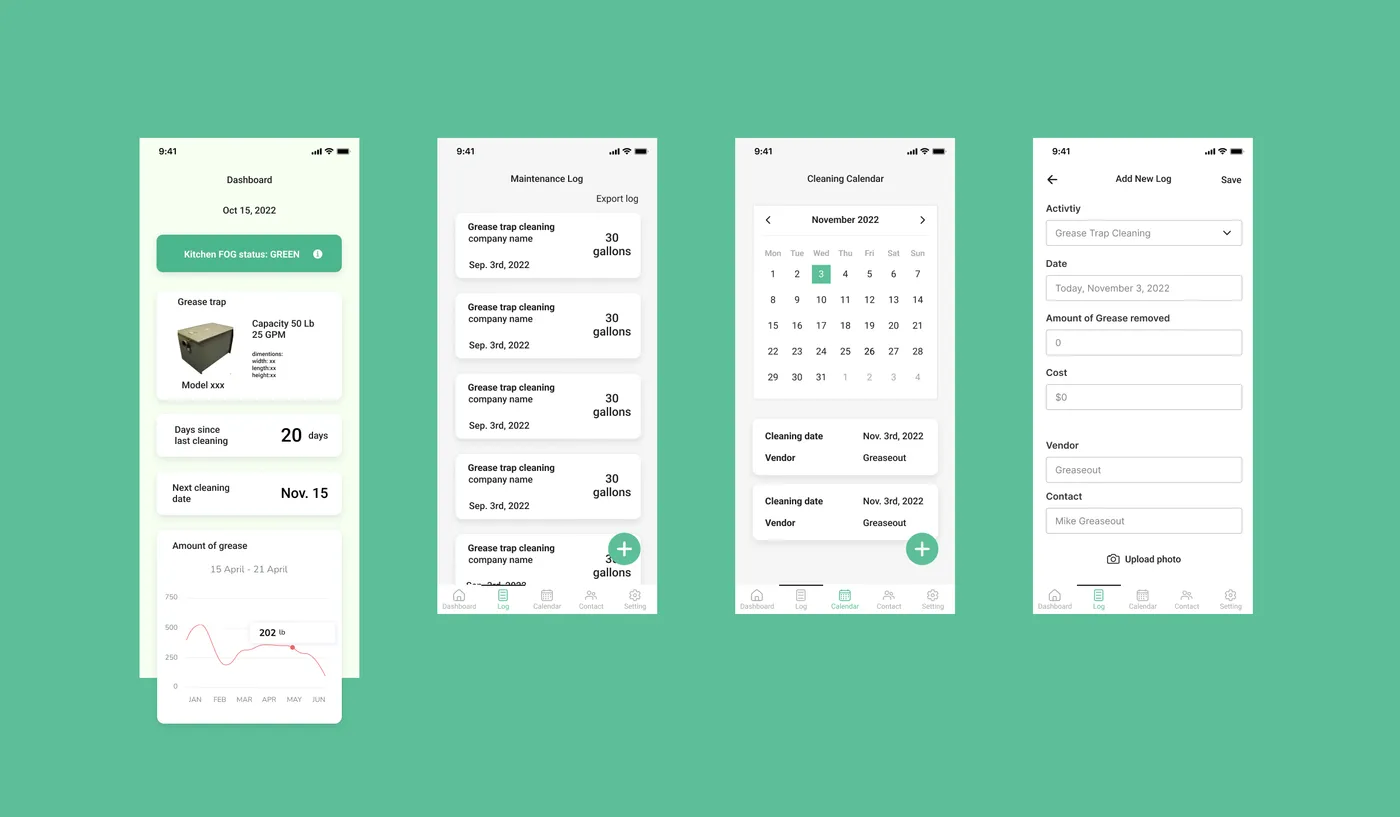
Dashboard: monitors kitchen grease trap status at a glance
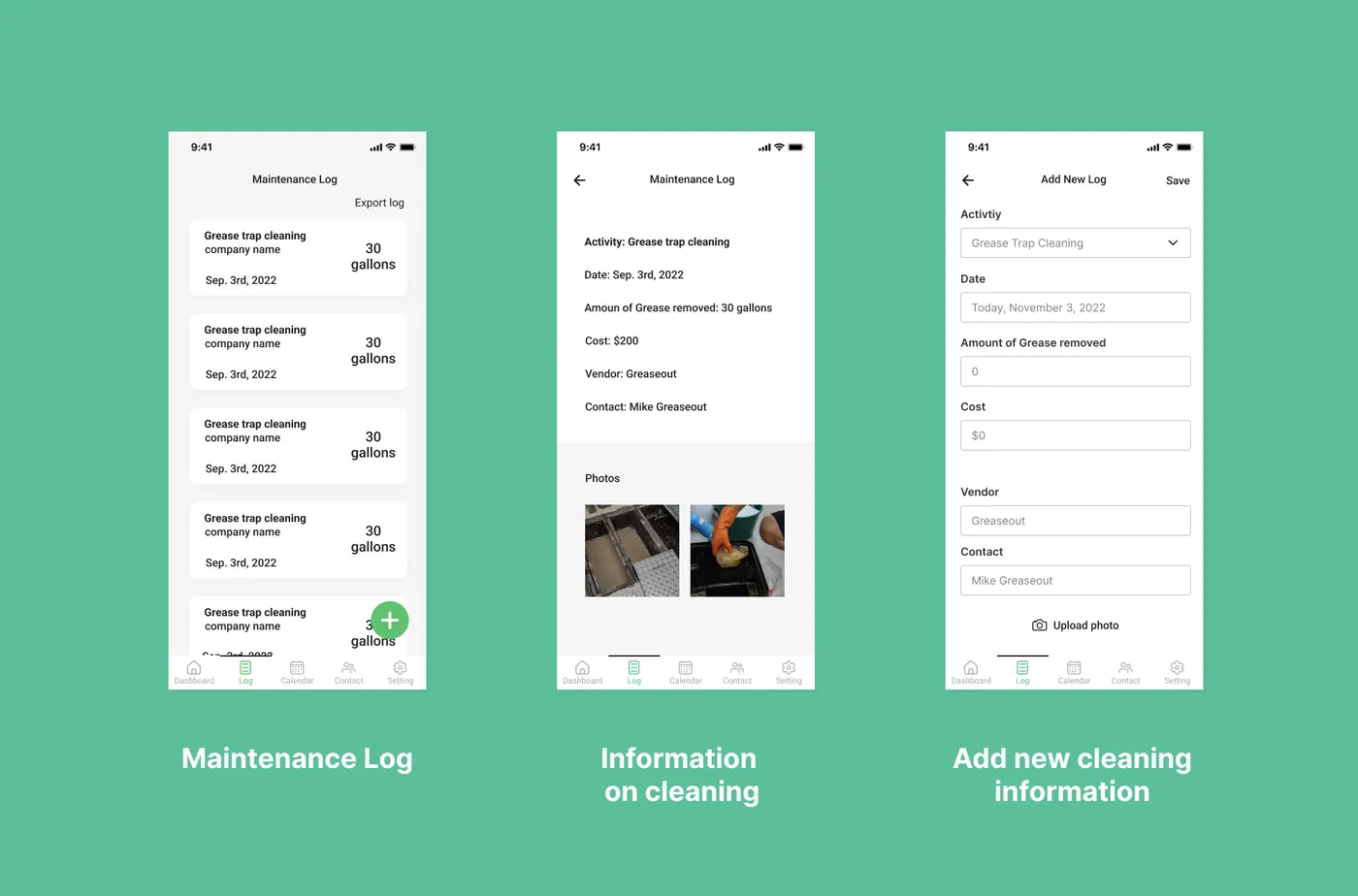
Maintenance log: tracks cleanings, exportable as inspection evidence
Calendar & scheduling: plans and reschedules cleanings with grease haulers directly in the tool
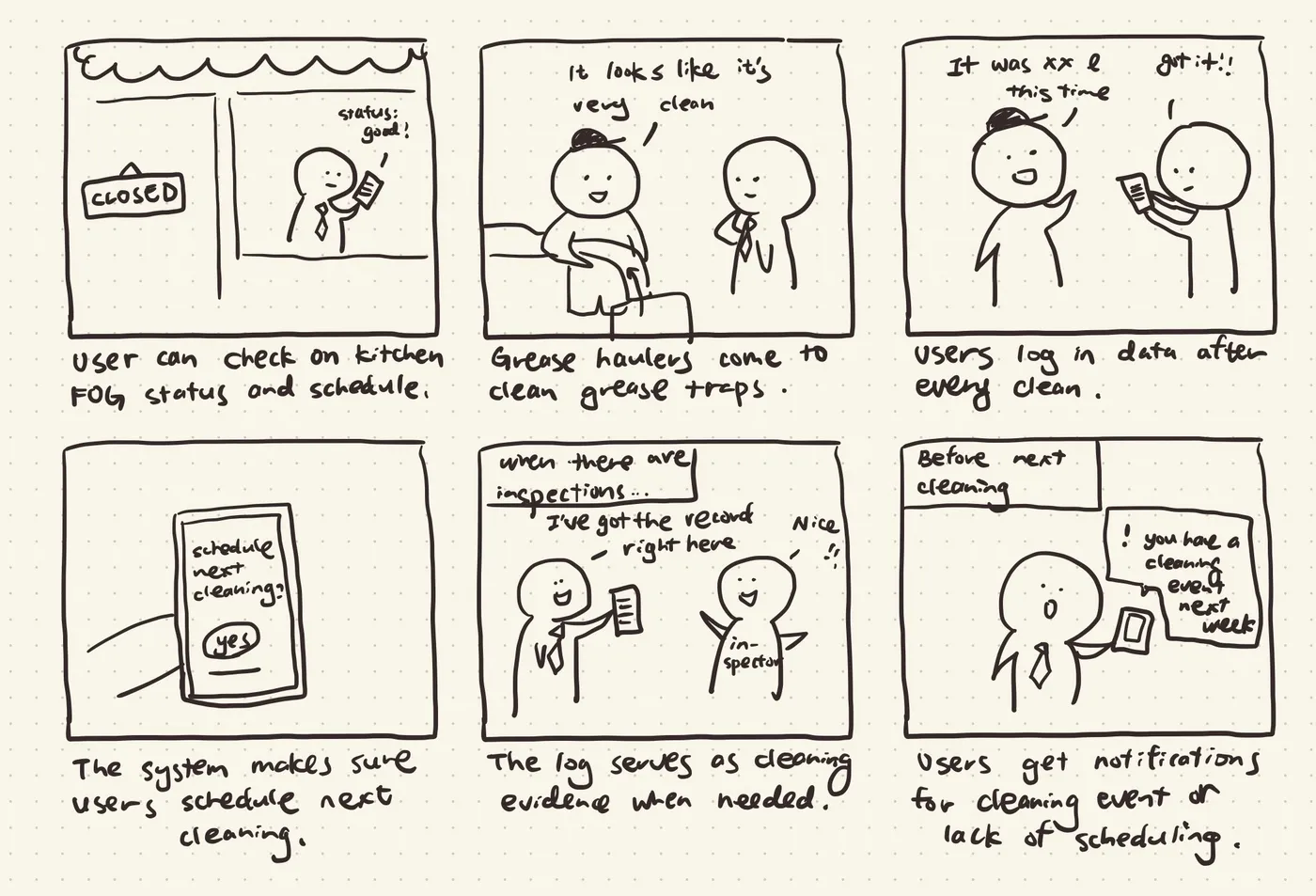
The full app flow: dashboard, maintenance log, cleaning calendar, and log entry.Maintenance log flow: viewing cleaning history, log details, and adding a new entry.Early storyboard mapping the user flow, from checking FOG status to logging a cleaning after a hauler visit.
Outcome
The research and prototype were presented to the City of Lansing's Public Service
Department. Following the presentation, I was invited to a follow-up meeting with the
department's Sustainability Manager and department head to discuss the FOG resolution
framework in more depth, where I was told several of the recommendations were planned for
implementation, though the specific scope and timeline weren't shared with me directly.
More broadly, the project opened a concrete conversation about how UX and service design
can work inside local government (a space that rarely has design resources at all) and
created a bridge between the city and outside expertise it wouldn't otherwise have easy
access to.
Before
No public FOG guidance, disposal options, or city touchpoints after licensing
→
After
FOG resolution framework + management tool prototype: recommendations slated for implementation
Reflection
One thing this project taught me pretty quickly was that research doesn't always happen
under ideal conditions. People were busy, the team was small, and I couldn't exactly wait
around for participants to come to me. So I went to where they already were. It was a
simple shift, but one that made the research much more grounded in how people actually
experienced the service.
— Grace, UX Researcher & Service Designer
Sharing the work
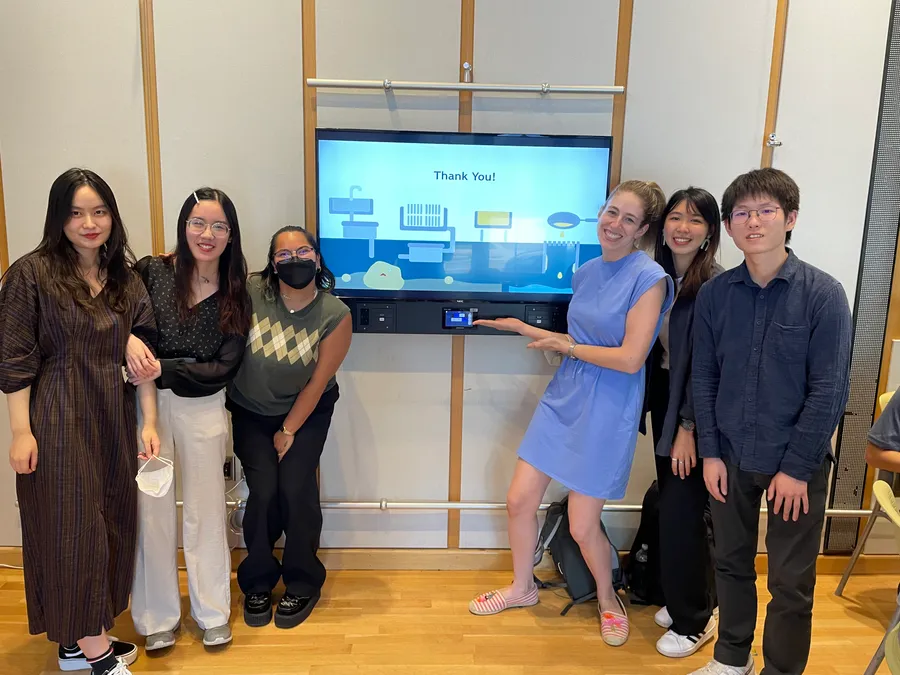
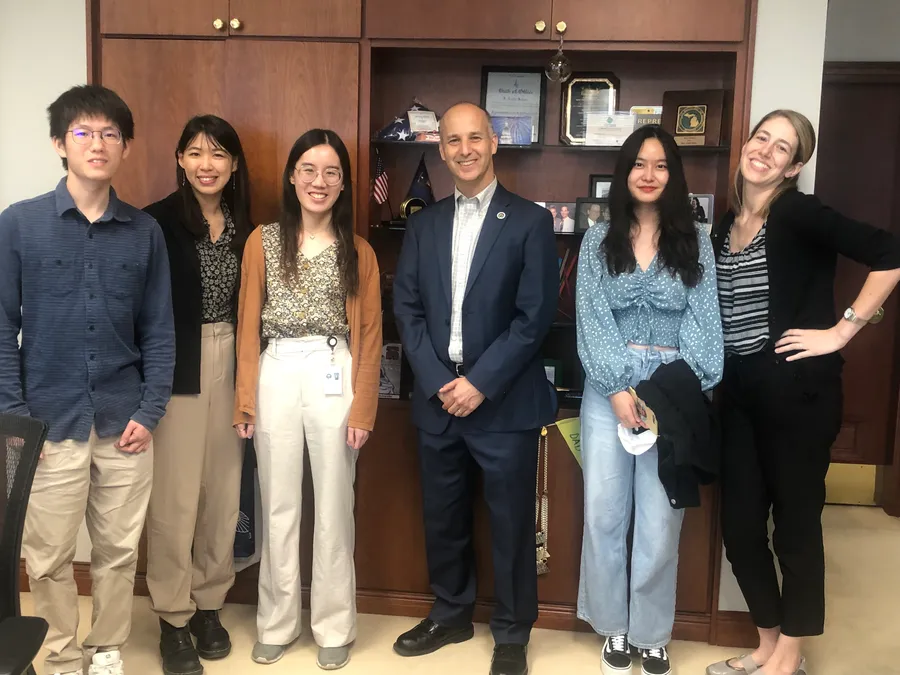
Meeting with the Mayor of Lansing's office to share our research and prototype.Presenting the final FOG Resolution Program and prototype to the city.
There's always more to the story.
Curious about the research, decisions, or what happened behind the scenes? I'd love to chat.